Template library · Modern German

Brüderhaus — a modern German restaurant website template

For kitchens cooking a northern European repertoire a long way from home: a dark cinematic template with a waiting-list opening, a compact carte, and photo-tile ordering.

Modern GermanCuisine House · Waiting List6 pages · 41 editable sections0% commission
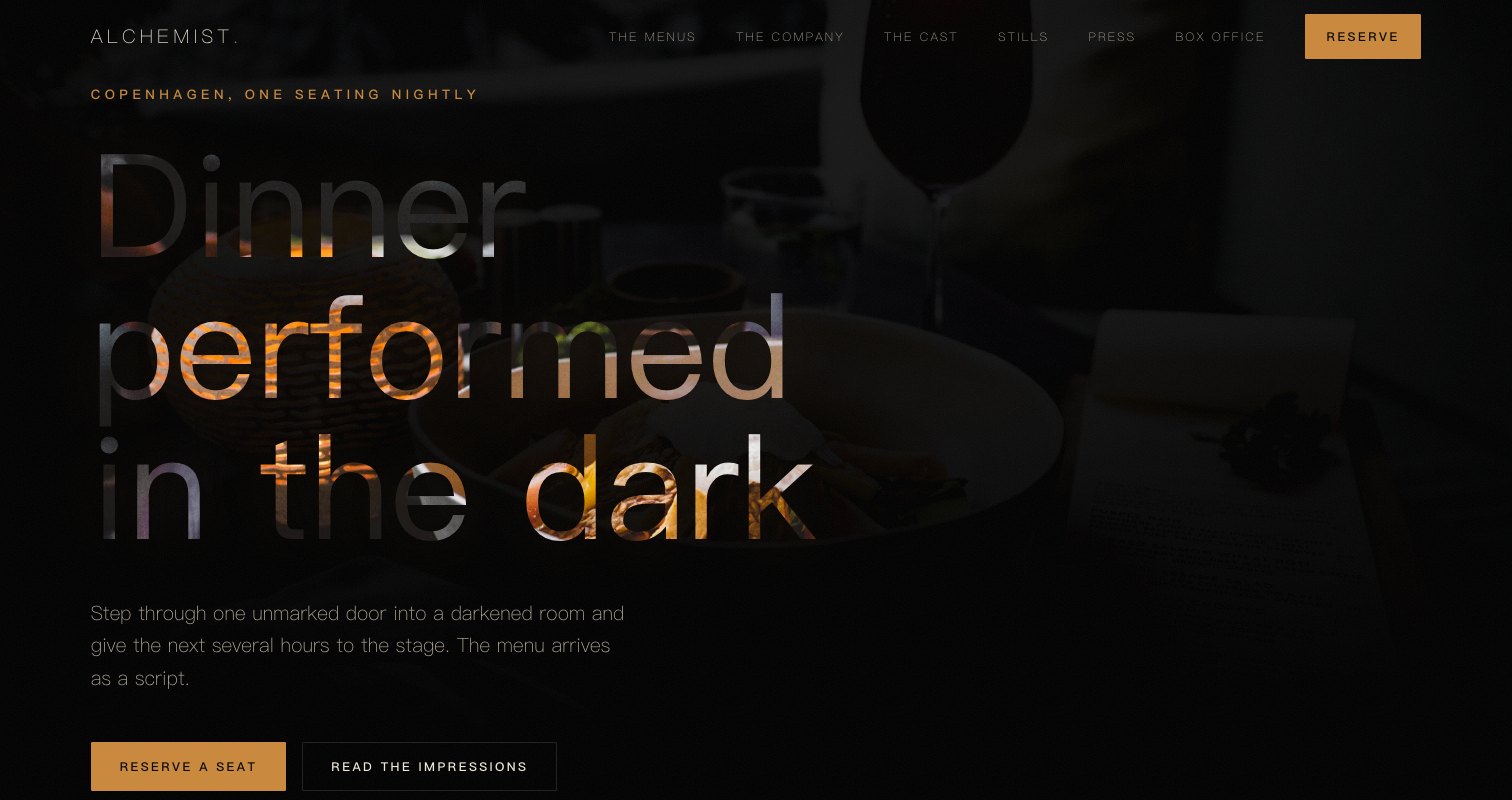
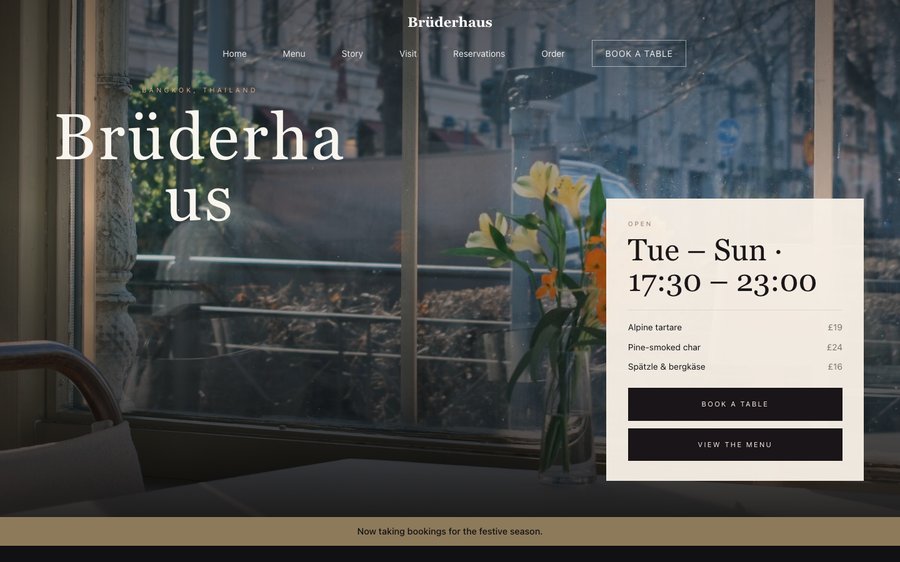
Brüderhaus, a modern German restaurant website template — the home page as it publishes
Brüderhaus · Bangkok, Thailand

Starter is £19/mo excl. VAT and includes a complete restaurant website, a live structured menu, enquiry and newsletter forms, and managed search readiness. Growth is £39/mo excl. VAT and adds direct live bookings, a custom domain with managed SSL, and table and floor-plan operations. Full is £69/mo excl. VAT and adds online ordering and multi-site management for up to five restaurant sites. TableSpark commission is 0%. Stripe's standard card-processing fees apply to online payments.

No agency, no retainer, and the best value an independent UK restaurant can buy. Instead of spending thousands on a bespoke build and waiting months for it, you start from a finished design like this one and go live the same day. Then it is yours to keep current — and a menu that can be corrected in a minute is a menu that stays true. The layouts are built mobile-first and scale up, and the plans add reservations, table management, ordering and the tools to run them — 0% commission to us.

This is yours already. Prove it.

Brüderhaus is a near-black room with a green that reads as a bottle rather than a leaf. Yours might be white tile and morning light, or brass and candles, or something nobody has built yet.

Rather than explain, here is the thing itself: the builder’s Theme controls on one side, the live site on the other, both real. You cannot break it, nothing saves, and no account is required to have a go. Go on.

Loading the live preview…

ThemePagesBlocks
Accent colour

Or pick any colour at all — the builder carries a full spectrum picker and a hex field.

Colours
Fonts
Two real things side by side — the builder’s Theme panel, and the site it changes.

Now walk the whole thing

6 pages, and every one of them is here. What follows is the site itself rather than pictures of it. The same engine that publishes a live restaurant is drawing it here, links and all. The Phone toggle shows the small-screen version.

Loading the live preview…

Rendered live. Every link in the frame goes where it says; the tabs above jump straight there.

Who this was drawn for

A German kitchen operating outside Germany is doing translation work on every plate, and the website has to hold both halves — the technique and the place. The design does it with restraint: a dark, filmic ground, a single cool accent, and photography given room to establish a mood before any copy arrives.

The opening is a waiting list, which is an unusual and honest hero for a small room with more demand than covers. It states the position plainly and gives the guest something to do about it, rather than pretending a table is always available.

Pulling the home page apart

Nine blocks, all editable modules:

  • Hero — Big opening image, name & buttons, in the Waiting List treatment: Live waiting-list card over the brunch table.
  • Announcement — Slim notice bar at the top.
  • Signature dish — One dish, full screen — name, story, price.
  • Text + image — A paragraph beside a photo.
  • Menu preview — A few dishes on a sliding rail.
  • Values — Three guiding values.
  • Reviews — Guest quotes with stars.
  • Call to action — Headline + button band.

Loading the live preview…

The Compact layout. The real menu page. Try it at phone width — the structure survives the squeeze.

The ordering page: same habit, different economics

This is the part worth pressing. Brüderhaus uses the Photo tiles ordering layout — every dish is a tile with an image, a price and an add button that becomes a quantity stepper. Photo tiles work here because the online list is short and visual — the bread, the charcuterie, the cakes. Each tile carries an image, a price and an add button that becomes a stepper.

Choices are chips on the tile rather than a modal, the basket stays visible with a running total, and collection asks only for a name and a phone number. Payment lands in your own Stripe account, and TableSpark takes 0%. Stripe’s standard card-processing fees apply to online payments.

What the guest is asked depends on how they are eating: table number, phone number or address, and never all three.

Loading the live preview…

Have a go

This is the frame that matters. It is the real ordering page at a real phone width — not a mock-up, not a video.

  • Switch section — your scroll position stays where it was.
  • The stepper sits on every row, so adding is one tap from anywhere in the list.
  • Count, total and Place order are pinned to the bottom throughout.
  • Sizes and choices arrive in a bottom sheet, within reach of the same thumb.

On a laptop the same page puts the basket in a panel beside the menu that follows the scroll.

The ordering page at a real phone width, opened at the ordering block. Add a dish and watch the bar at the bottom keep count.

The pages behind the menu

The story page carries the two-country narrative properly — where the recipes come from, why they are cooked here, who cooks them. There is a timeline, an interview and a gallery, and the reservations page manages a room that runs on bookings alone.

Loading the live preview…

The story page. This is where a restaurant stops being a menu.

Upload your menu. The AI does the typing.

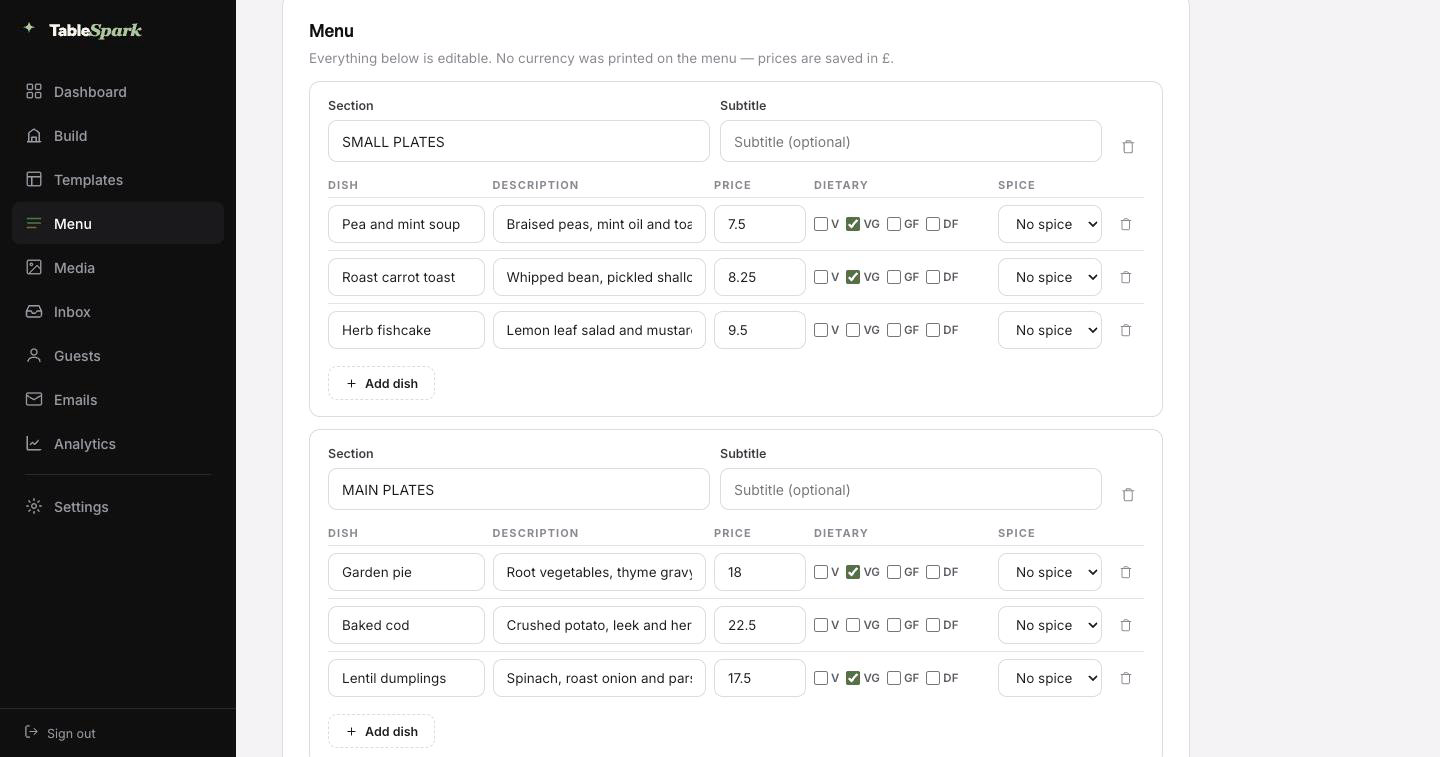
The worst job in setting up a restaurant site is typing the menu. You do not have to. Send in the menu you hand to guests — card, board, PDF, ten pages if it runs that long. What returns is not a scan but a structured menu: every section, every dish, every price, with dietary and spice marks read off the page where they were printed. Nothing saves until you have looked at it — every field is editable on the review screen.

And because it is data rather than a photograph, it can do work. That single menu is what powers the menu page, the ordering page, the highlights on the home page and the Restaurant structured data a search engine reads. Change a price once afterwards and all of them follow.

Search titles and descriptions are drafted the same way: press Write with AI and it writes from the page in front of you. You still approve every line of it before it goes anywhere.

Step one
Take a picture

Whatever your menu lives on today — card, board, PDF, ten pages of it.

Step two
It comes back structured

Ordered sections, named dishes, descriptions, prices and marks, all editable.

Step three
One source, many pages

Menu page, ordering page, home-page highlights and the Restaurant schema — all reading from the same menu.

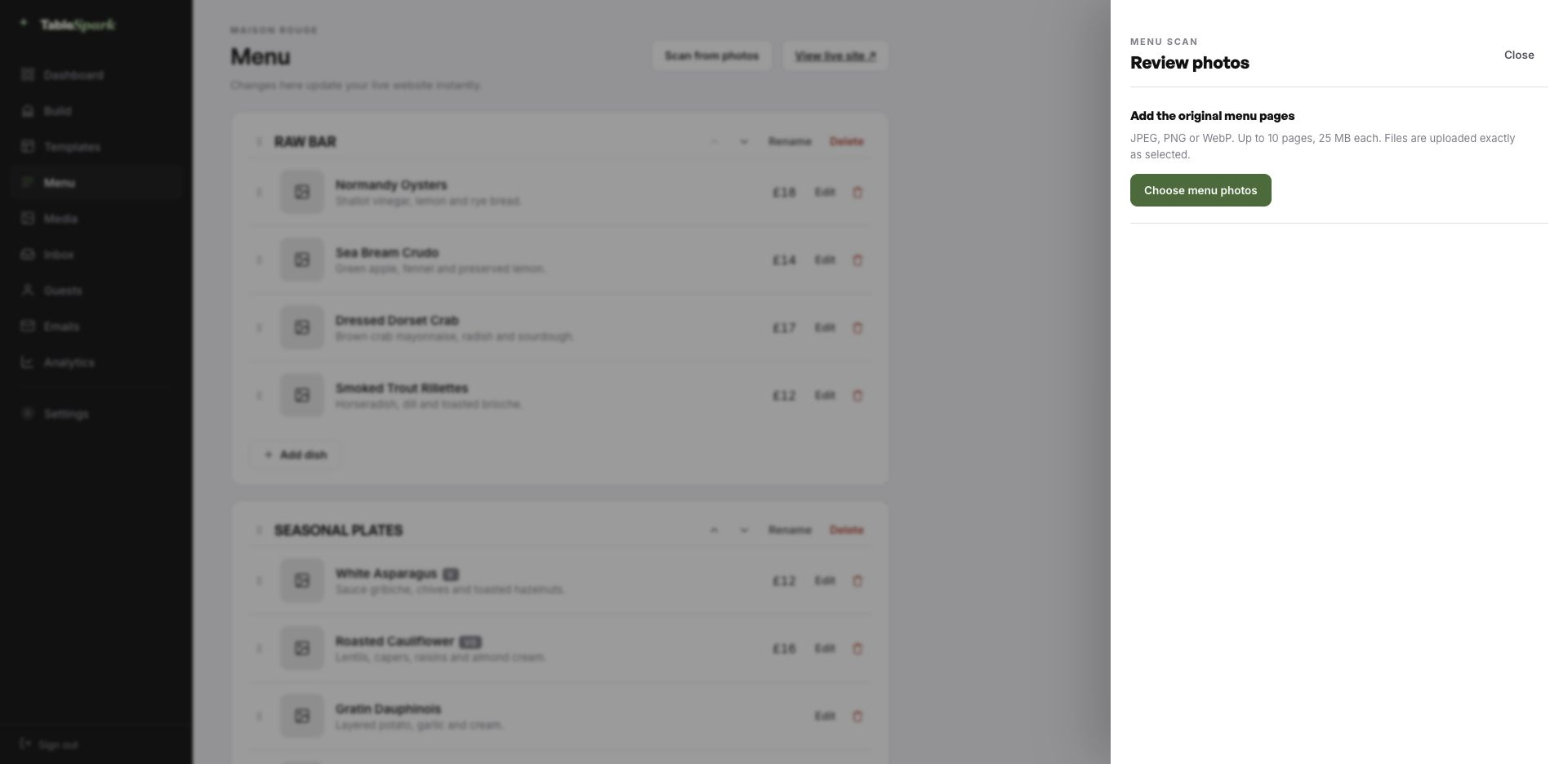
The TableSpark menu editor with the Scan from photos panel open, ready to take menu photographs
One · uploadThe entry point: upload up to ten menu pages as JPEG, PNG or WebP.
The review screen after a menu scan: sections, dish names, descriptions, prices, dietary marks and spice levels, every field editable
Two · reviewBefore saving: the whole menu as fields. Fix a misread price or an over-confident accent and continue.

Ten minutes to live — and taking bookings

The waiting is the part that has been removed. Consider it a fully fitted kitchen waiting for your knives. Ten minutes to live, and the booking form does not need setting up: it is already answering. The booking appears in your inbox; the guest gets a confirmation before they have put their phone down.

One Stripe connection turns the site into something that collects money: deposits on tables, payment on orders, paid direct. Our commission is 0% at every plan level. Stripe’s standard card-processing fees apply to online payments. That is the only deduction.

  1. Pick BrüderhausThe full site arrives in your account as a working draft.
    1 min
  2. Change the name and the wordsRewrite the words by clicking them; the name carries everywhere.
    4 min
  3. Upload your menuSend the menu in as a photograph and check what comes back.
    3 min
  4. PublishIt goes live on your address and starts taking bookings.
    1 min
  5. Connect StripeNow you can take deposits on tables and payment on orders — direct to your account.
    1 min

Moving it onto your own domain

Nobody prints someone else’s name on their menu, and a web address is no different. You start on a TableSpark address so you can publish today, and move the site onto your own domain whenever you are ready — the one on your menus, your napkins and your Google listing.

You do not touch a certificate or a redirect rule. TableSpark issues and renews the SSL, points the bare domain at your chosen host, and keeps the search signals consistent. If the domain is already yours, nothing needs buying; you are told precisely which DNS record to point where.

bruderhaus.tablespark.ukbecomeswww.bruderhaus.co.uk

Every booking sends an email — in your colours

Most guests will see this email more often than they see your home page. On booking, an email goes out on your behalf with everything the guest needs — when, how many, where, how to reach you, and a one-click way to give the table back. Reminder emails, deposit receipts and cancellation notices are cut from the same cloth.

And the email is yours to design, not ours. Six templates, your accent colour, your logo, a cover photograph, the header layout, a sign-off in your own voice, your links and your social accounts. Once your domain is connected the email leaves from your address as well, not a generic one.

Not a mock-up: the frame runs the actual guest-email renderer. Press a template or an accent and watch it change.
Loading the email…

Every part is editable

Everything a guest sees after they book, set in the same place as the site.

  • Spark, Ink, Linen, Noir, Bistro, Plate — pick one.
  • Set the accent, add a logo, add a photograph.
  • Once your domain is connected, it sends from you.
  • The reminder, the receipt and the cancellation match.
  • Your sign-off — Bis bald.

Try the buttons above — this is the live renderer, not a screenshot.

What you change, and what stays

  • Yours from the first minute: the restaurant’s name, the copy on every page, the photography, the dishes and prices, the opening hours and address, and the theme itself.
  • Kept for you: the load-bearing decisions: long-menu layout, mobile ordering behaviour, responsive stacking, and colour contrast that does not collapse when you change the palette.
  • Never locked: restructure any page, delete sections outright, add new modules, and create or remove pages. None of it is locked.

Built to be found, not just to be live

A live link proves the page exists. It does not prove Google can read it. Sites sit at a perfectly good address and never appear in search — because of a leftover noindex, canonicals that disagree, pages nothing links to, a menu trapped in a PDF, absent restaurant schema, or verification never finished. What follows is expensive: searches for your name, your dishes or your street send guests to marketplaces that take a cut of the booking you would have had for free.

None of it is left for you to assemble. Rankings and indexing are Google’s decision and no honest supplier promises either — but the configuration that makes them possible is done.

Common questions

We are usually full. Is there a way to capture demand?

Yes — a waitlist. When a service has no availability the booking form can take the guest’s date, party size and contact details into your TableSpark inbox instead of turning them away, so a cancellation can be filled with a phone call rather than an empty table.

Our dish names are in another language. Does that hurt search?

Not if both versions are on the page, which is what the description field is for: the original name and the explanation together. Both are real, indexable text, so a guest searching either the German name or the English description can find the dish.

What happens between the booking and the arrival?

A confirmation email sent on your behalf, carrying the date, time, party size, where you are, how to reach you, and a link to release the table if their plans change. Reminders before service, deposit receipts and cancellation notices come from the same system. The design is yours: six templates, your accent colour, your logo, a cover photograph, the header layout, your own sign-off, your links and your social accounts — and once your domain is connected it sends from your address too.

Is any of this going to need a developer?

No. If you can edit a document you can run this: click a section, change what it says, replace the picture. There is no code view and no need for one.

What does online ordering cost, and do you take a commission?

Online ordering sits on the Full plan, and we take 0% of what you sell. Stripe’s standard card-processing fees apply to online payments. Payments go to your own account. Nothing else is deducted.

Do I have to type my whole menu in by hand?

You should not have to. Upload a photograph of the menu you already print and the AI turns it into structured sections, dishes, descriptions and prices, reading dietary and spice marks off the card where it can. Everything lands on a review screen for you to check before it saves. After that it is data rather than an image, which is why one price change updates the menu page, the ordering page, the home-page highlights and the structured data together.

Start from Brüderhaus

Take this design, make it about your restaurant, and publish it today. Building costs nothing; you pay only when it goes live.

Use this template free

More Dark Cinematic templates

More on the money side

← Browse all 50 restaurant website templates