Bookings, menus, online ordering, search. Written by the people building the product, between services.
What do you need to start a food delivery service from a restaurant in the UK? Register at least 28 days before trading (or tell the local authority about a new delivery service), give allergen information before the purchase is completed and when the food is delivered, show mandatory delivery charges in the invitation to purchase, check late night refreshment rules for hot food between 11pm and 5am, and remember alcohol is not treated as served until it is delivered.
Do you have to put the service charge in your Christmas menu price? If the charge is mandatory, yes: the CMA's price transparency guidance says the total price should normally include unavoidable charges, and it lists mandatory service charges at a restaurant. A purely discretionary charge can sit outside the price if the menu says so clearly. On screen: CMA209, the Price Marking Order 2003 article 4, and the statutory code of practice on distributing tips.
How much does it cost to open a restaurant in the UK? No UK dataset gives one total, so this guide builds the figure line by line with the official 2026–27 rates: the lease and Stamp Duty Land Tax, planning and the fit-out, licences, staff on the National Living Wage of £12.71 an hour, card fees and software, and what a Start Up Loan can cover. The worked example is one illustrative 50-cover restaurant in England; every input about it is an assumption, so swap in your own quotes.
What are the rules for setting up a dark kitchen in the UK? There is no national dark-kitchen rule, but planning, food registration, hygiene ratings, allergens and late-night licensing all still apply. On screen: the Use Classes Order, a 2022 Birmingham planning appeal, the 28-day registration rule, FSA survey figures on hygiene ratings, the two-stage allergen rule and Licensing Act 2003 Schedule 2.
TableSpark's audit of 1,000 independent UK restaurant websites in under two minutes: dead listings, missing restaurant data, menus as PDFs, booking and calling that leave the page, and what a site needs to be found and booked.
A one-prompt restaurant page looks finished until a real guest books: the deposit goes through, the booking is gone, and every glitch lands on the guest. Then the same booking runs through a connected restaurant system: site, Inbox, floor plan and kitchen.
Thinking of a fingerprint or face-scan clock-in for your restaurant staff? Under UK GDPR it is special category data, and consent only works if a card or PIN route stays genuinely open. In 2024 the ICO ordered one employer to stop and destroy the data, impact assessment and all.
A guest slips on a wet floor and goes to hospital. When must a UK restaurant report it under RIDDOR, how long must the record be kept, and why is the incident form health data? Plus one myth to drop: the 40-year insurance certificate rule was repealed in 2008.
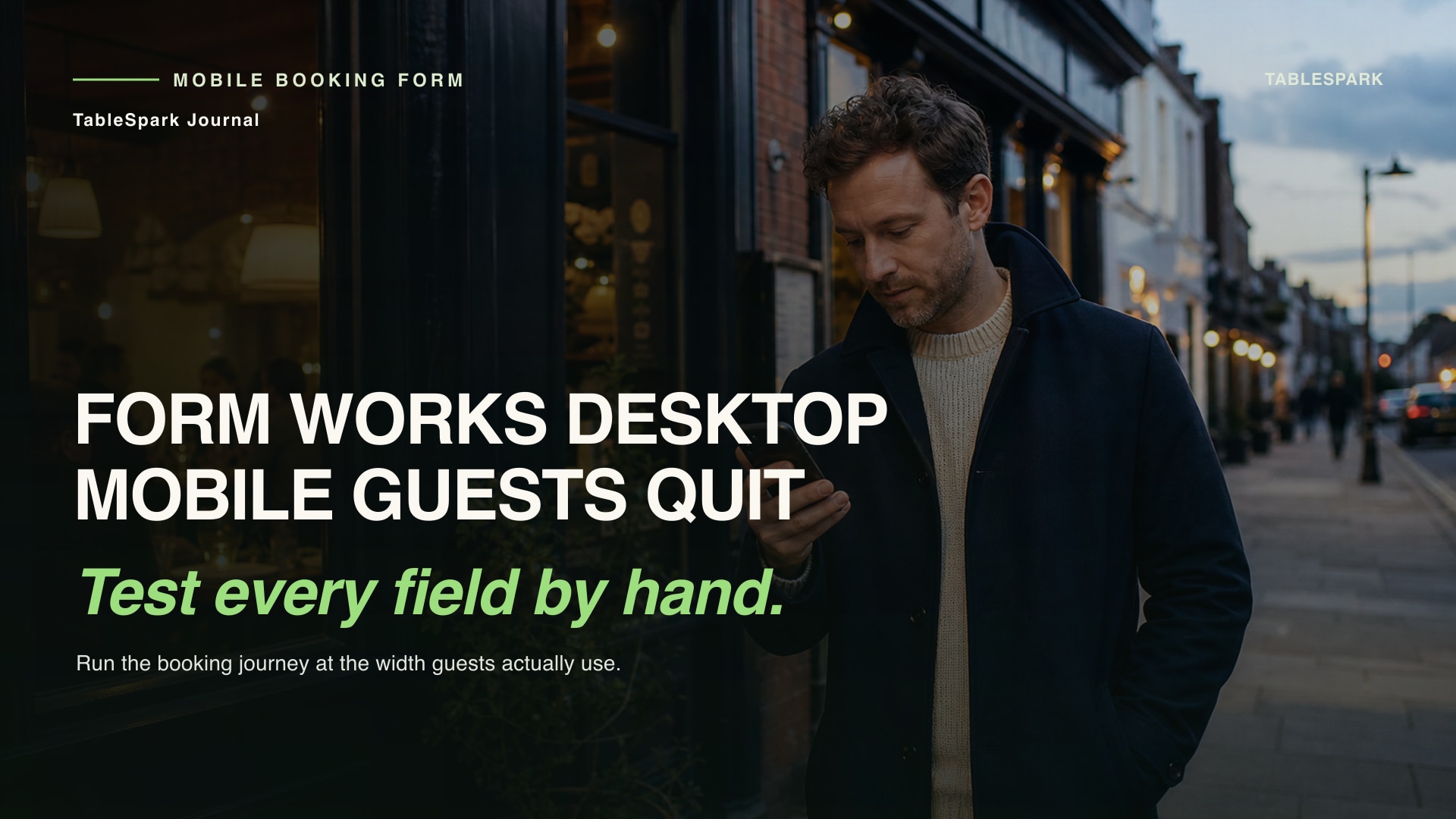
A mobile booking form can lose a reservation before the guest reaches submit. Test each field, keyboard, error state, confirmation and inbox handoff on a real phone.
A menu PDF can open on a phone and still be hard to use. Test loading, zoom, text size, links and the route back to current booking information before publishing.
A 76-second restaurant allergy handoff covering owned booking disclosure, named responsibility, current ingredient checks, written kitchen and service receipt, and the final guest conversation.
A public gluten-free, dairy-free or vegan label can outlive the evidence and kitchen controls behind it, leaving an allergic guest to trust a dangerous mismatch.