What UK law and the regulators actually require of a restaurant that publishes.
The recipe changed after the shoot, so a guest books on the strength of the dish photograph, is served something visibly different, and disputes it at the table.
The income year that decides a restaurant owner's start date is usually already banked by the time anyone reads about the rule, so the chance to plan is missed.
An independent restaurant copies a chain menu format it was never required to use, while a franchise that is genuinely in scope misses a duty it actually has.
A sourcing promise outlives the supplier that made it true. Since April 2025 the regulator has been able to act directly on an outdated claim that now misleads a guest.
When voucher terms change after sale, guests and staff can reach redemption with different expiry, refund or partial-use rules and no trusted record.
A promotion that ends at the till but stays live online can leave guests expecting a deal staff can no longer honour, creating avoidable disputes.
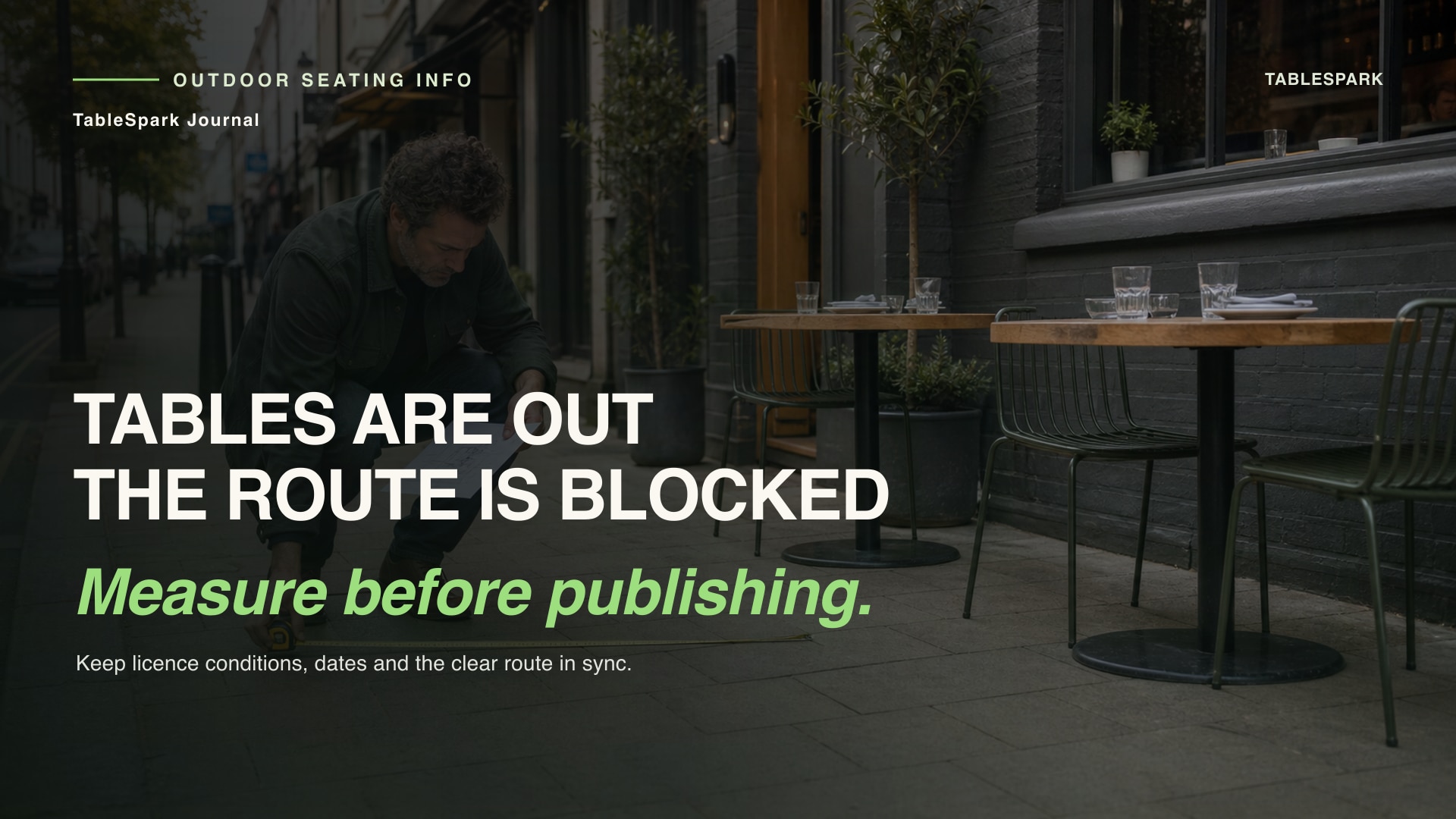
Promising outdoor tables before the licensed area, dates or conditions are confirmed risks guest disputes over seats the restaurant cannot offer.
A reform headline can trigger needless work—or hide a live duty—creating operational risk before a restaurant checks its legal status.
An England micro-firm restaurant risks reaching 31 March 2027 without a confirmed food-waste collection, workable bins or clear staff instructions.
A restaurant can switch on online food sales before confirming the registration timetable, creating an avoidable go-live compliance risk.
The same canned drink can carry a deposit when it leaves in a bag and none when it is drunk at the table, and the customer notice must match the route chosen.
A busy Saturday can put more than 200 people inside a restaurant that has never counted, leaving the owner exposed to a future duty or to spending nobody asked for.