Bookings, menus, online ordering, search. Written by the people building the product, between services.
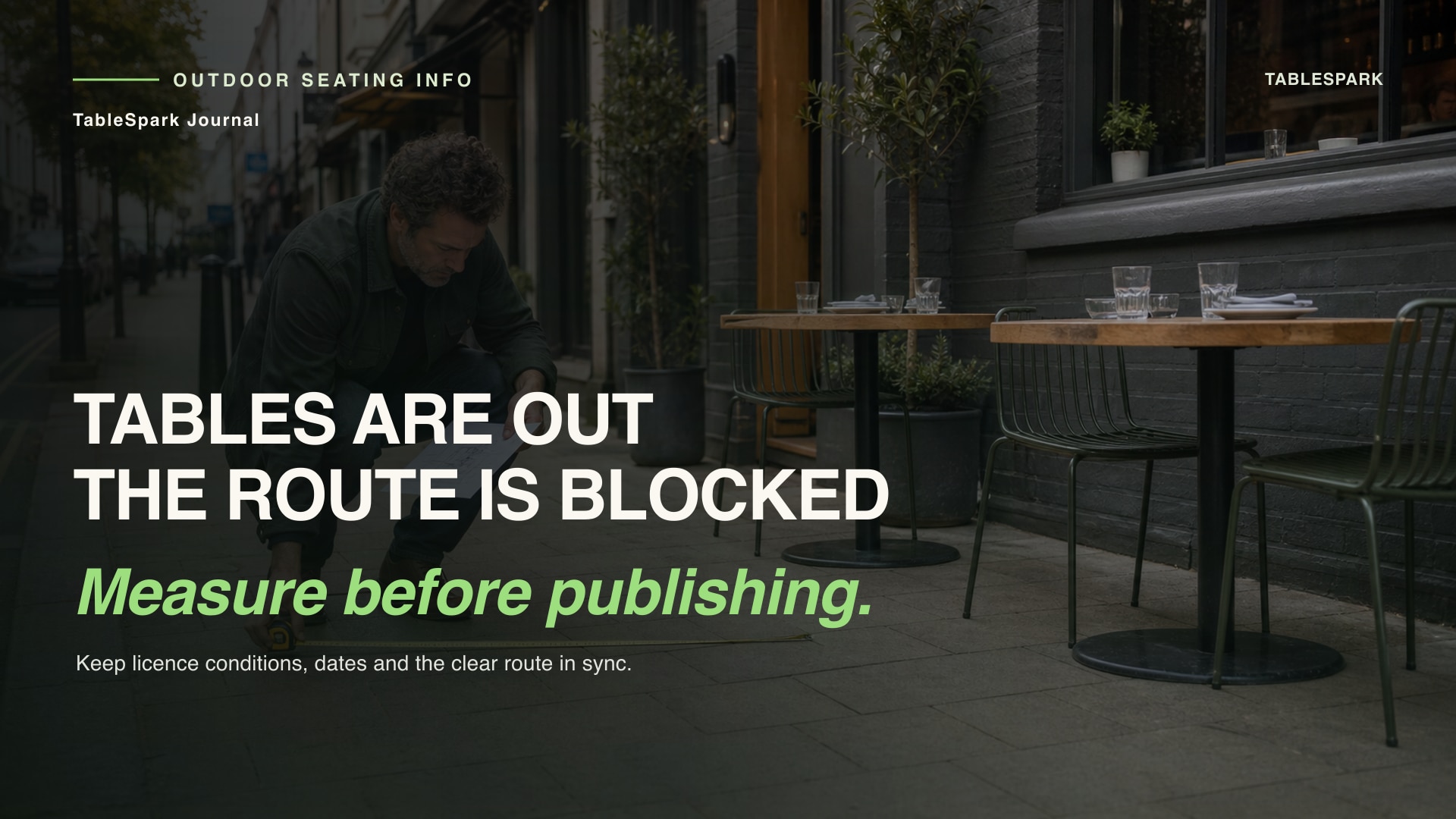
Promising outdoor tables before the licensed area, dates or conditions are confirmed risks guest disputes over seats the restaurant cannot offer.
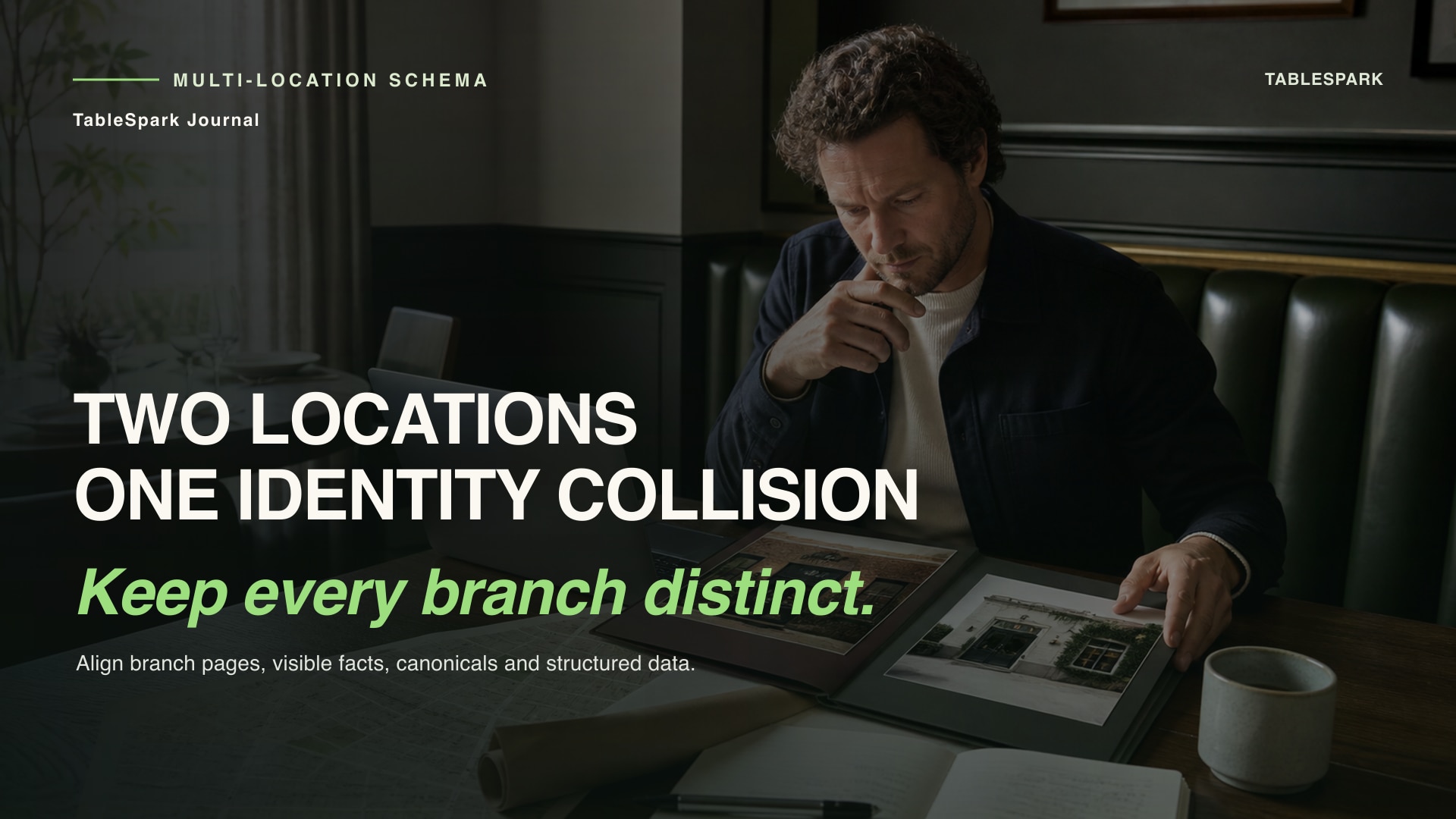
When branch pages reuse one address, phone number or entity, guests can reach the wrong venue and search systems receive conflicting location facts.
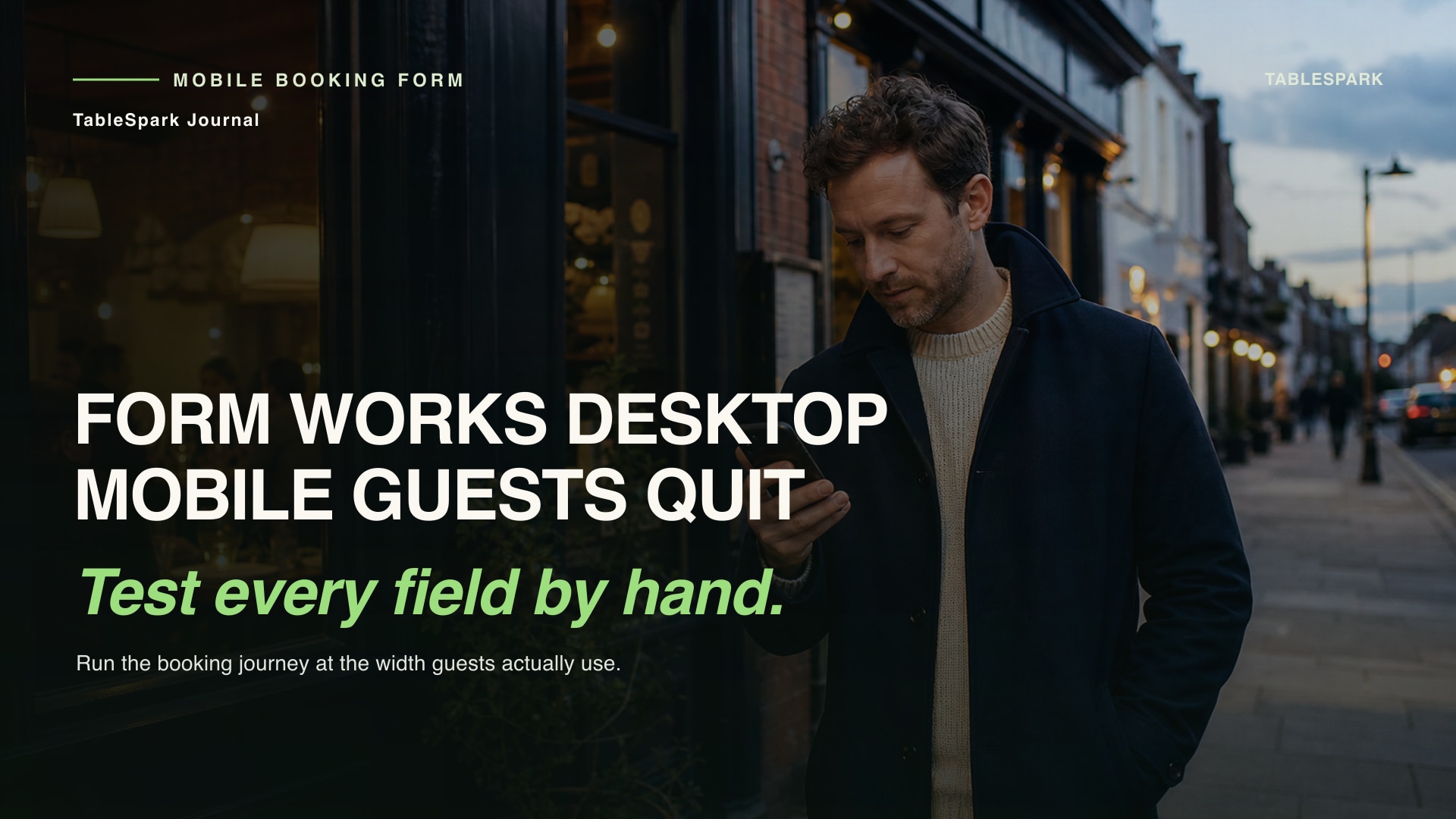
A booking form can look complete on desktop yet hide labels, trigger the wrong phone keyboard or lose a guest’s correction before submission.
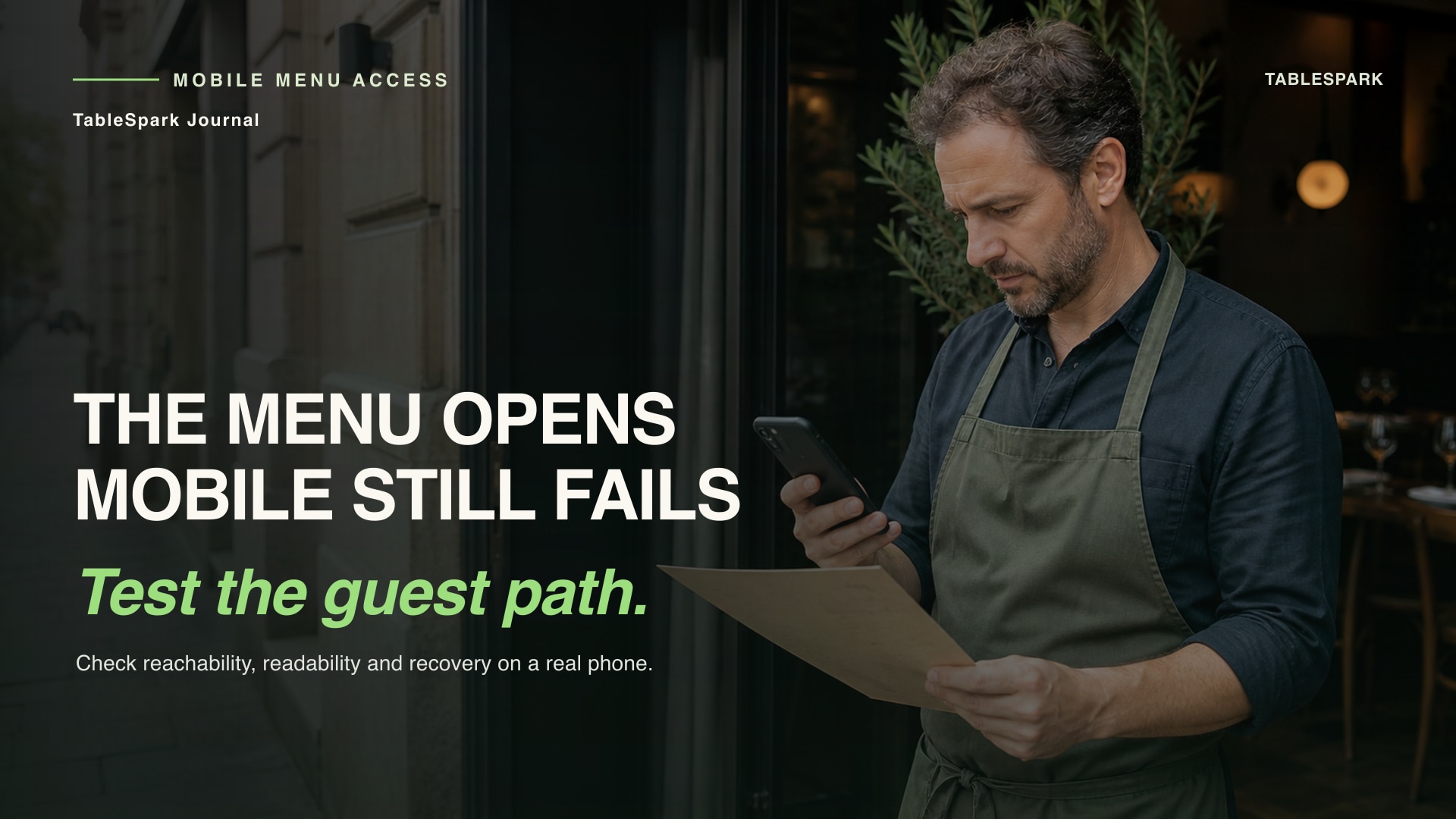
A menu link may open on a phone yet leave guests pinching tiny text, waiting for a download or reading an out-of-date file.
A live menu can exist at several URLs while conflicting references leave the wrong version selected or the right one overlooked.
A reform headline can trigger needless work—or hide a live duty—creating operational risk before a restaurant checks its legal status.
A guest can choose one branch and receive confirmation for another, leaving both venues with an avoidable service dispute.
An England micro-firm restaurant risks reaching 31 March 2027 without a confirmed food-waste collection, workable bins or clear staff instructions.
Restaurant structured data can remain technically valid while describing the wrong entity, address, hours or canonical identity.
A fake restaurant site can copy a venue’s identity, divert guests from the genuine route and leave the owner preserving evidence under pressure.
A POS connection can be live while wrong names, variants, prices, availability or tax fields reach the public menu.
A restaurant can switch on online food sales before confirming the registration timetable, creating an avoidable go-live compliance risk.